Numerical modeling

Numerical modeling for harbor projects
WMC deploys a comprehensive suite of modelling systems to simulate with the highest level of accuracy:
• Incident wave conditions, using wave generation and propagation models for sea states (WWM-II, SWAN, TOMAWAC).
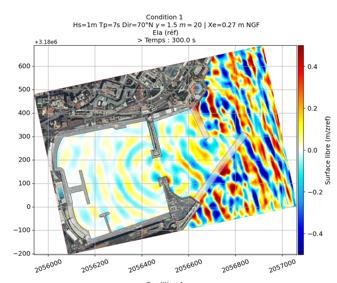
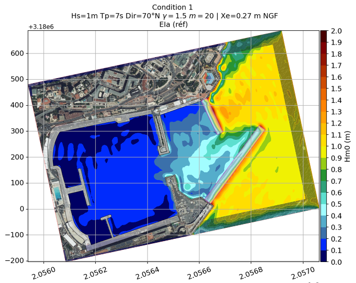
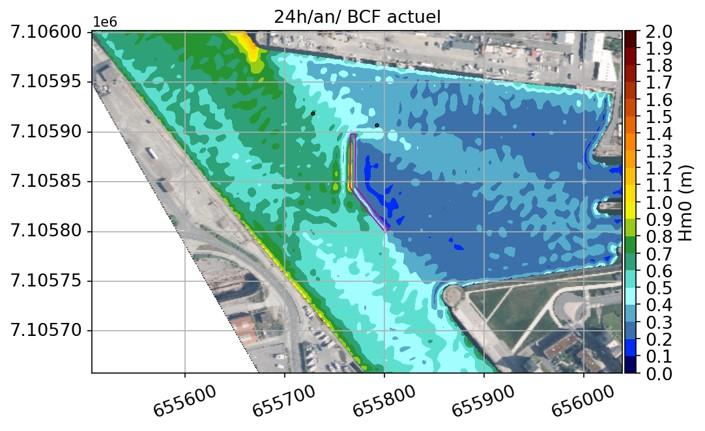
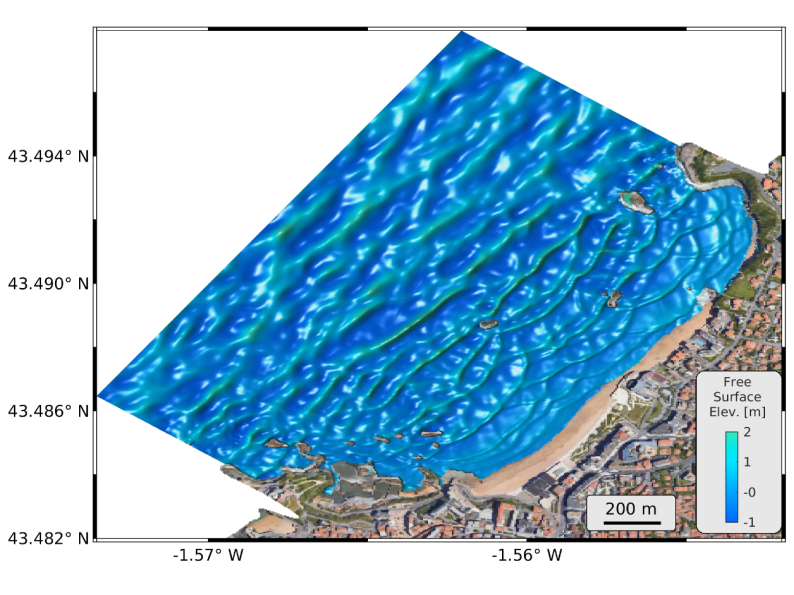
• Harbour agitation, using so-called phase-resolving models (SWASH-3D, REEF3D, BOSZ). Reflection effects are specifically modelled according to the type of structure considered: rubble-mound breakwaters (permeable), vertical quay walls (almost fully reflective), and submerged or floating wave attenuators.
Our harbor numerical modeling services include:
Harbor agitation studies: simulation of wave behavior inside basins to optimize the layout of quays and protective structures.
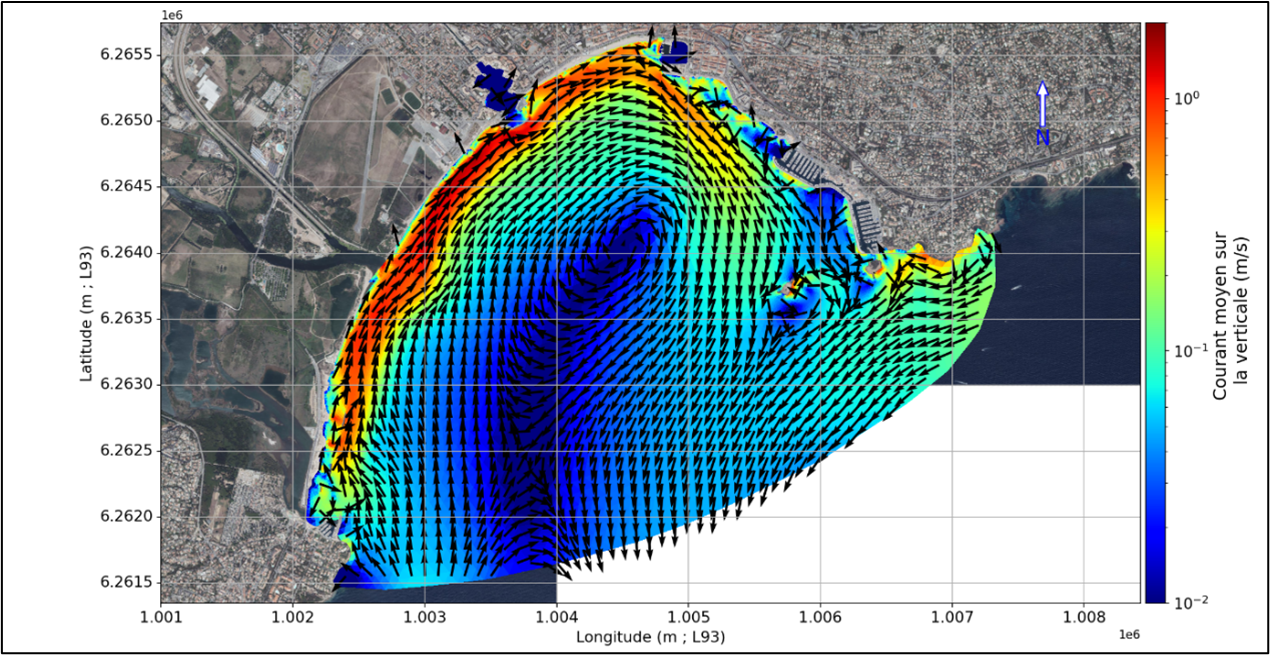
Current modeling (tides, wind-driven currents, seiches): analysis of results with respect to navigation conditions and structural loads, in order to optimize basin geometry and reduce currents.
Sedimentary process simulation: quantification of siltation and sand deposition processes, optimizing the positioning of structures to minimize dredging requirements.
Water renewal studies: quantifying and optimizing water renewal within a basin.
Overtopping models
WMC implements a set of numerical models to simulate with the highest accuracy:
Incident wave conditions, using wave generation and propagation models (WWM-II, SWAN, TOMAWAC).
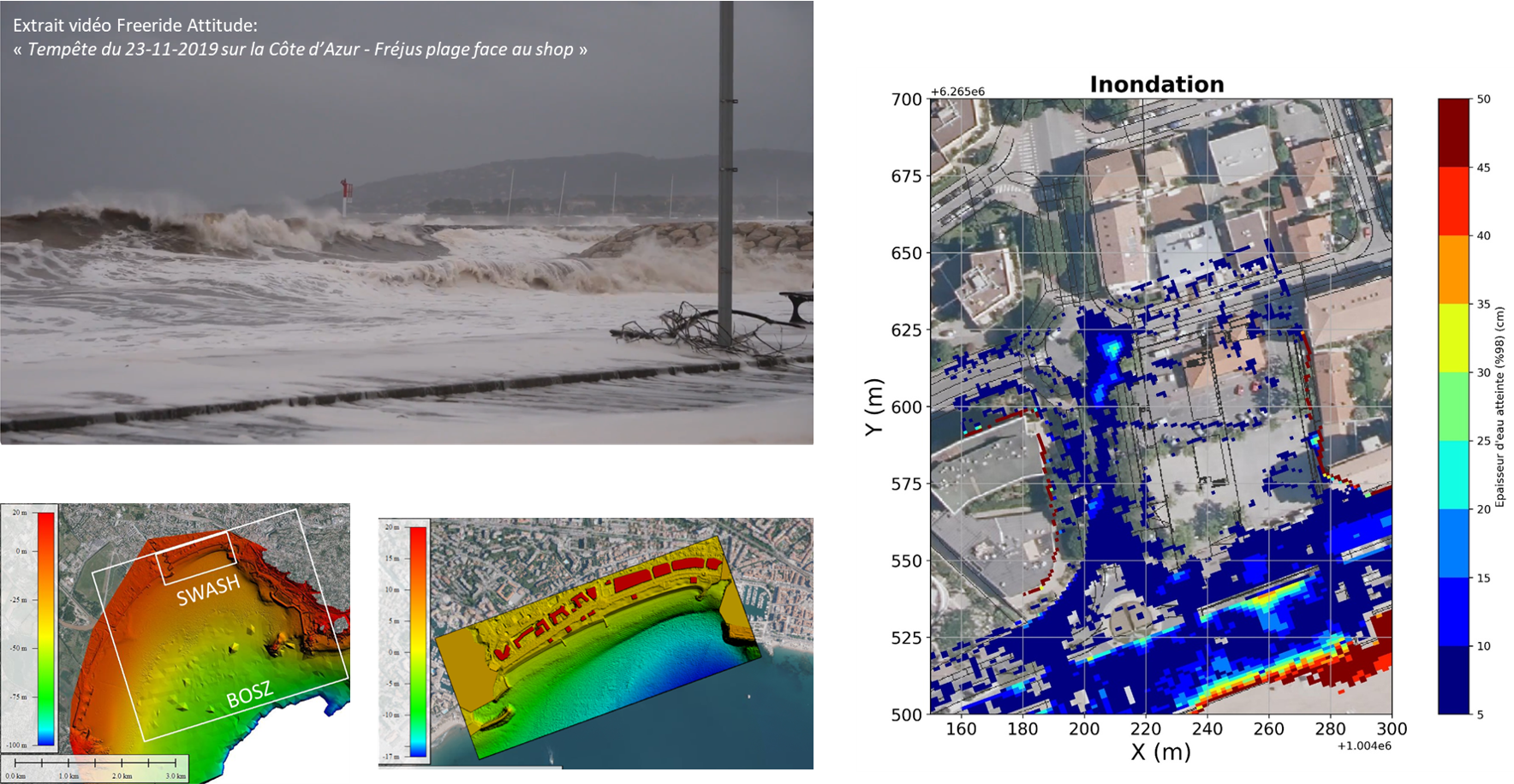
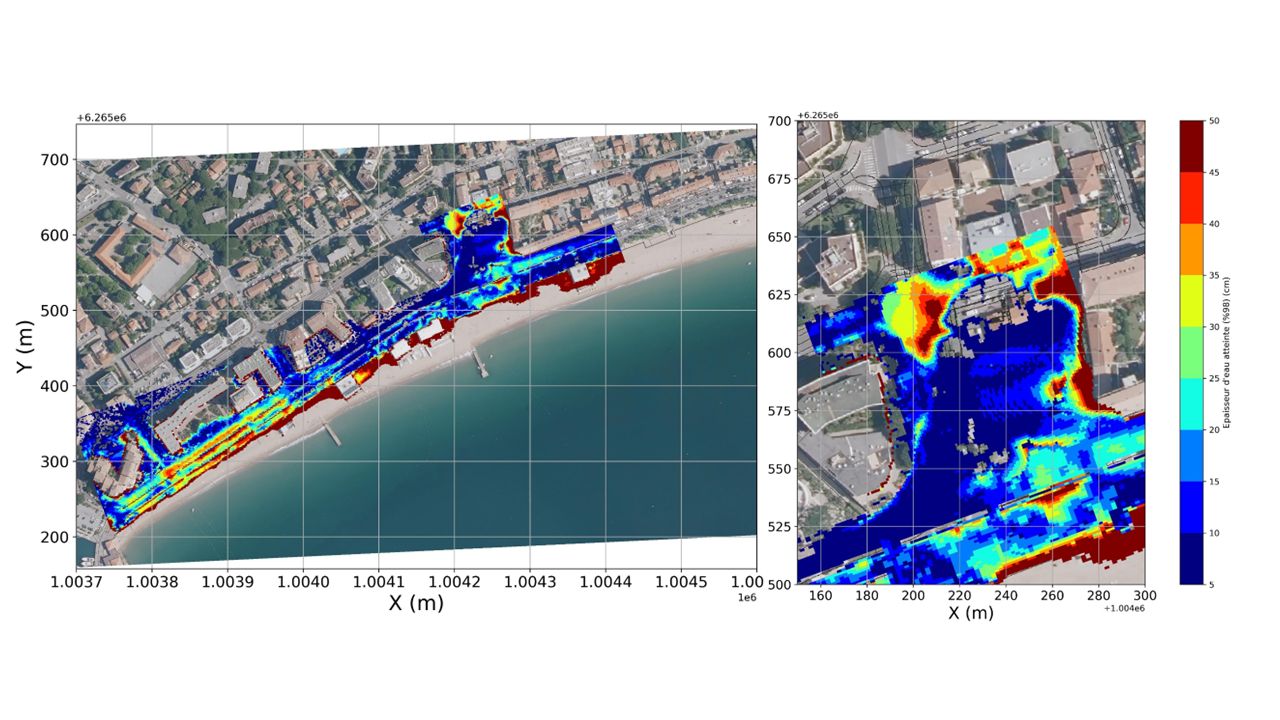
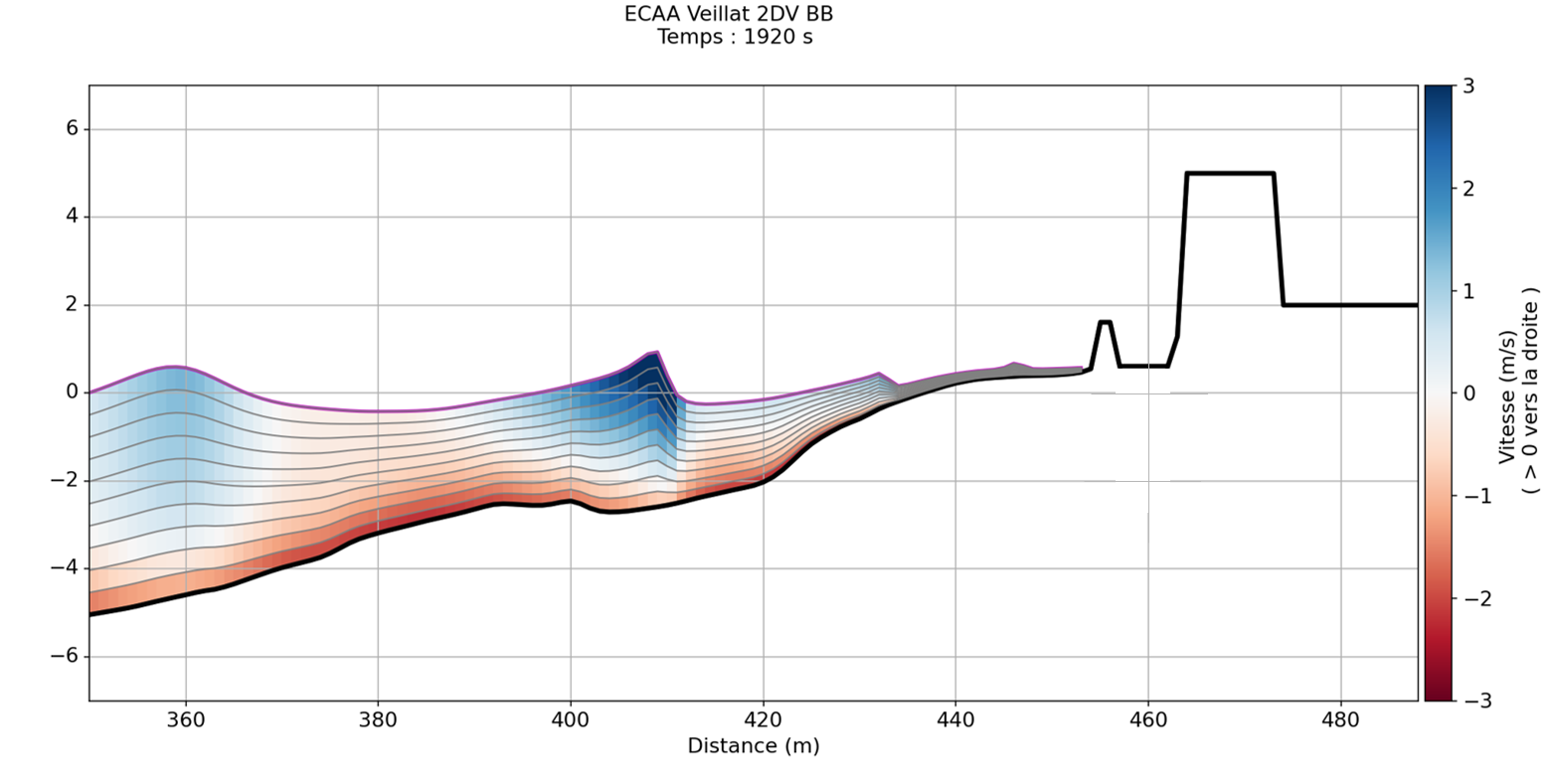
Wave overtopping, using phase-resolving models (SWASH3D, REEF3D, BOSZ). At this scale, relevant physical processes include wave breaking, wave run-up, and interactions with coastal structures, particularly overtopping by wave groups.
Spectral wave models
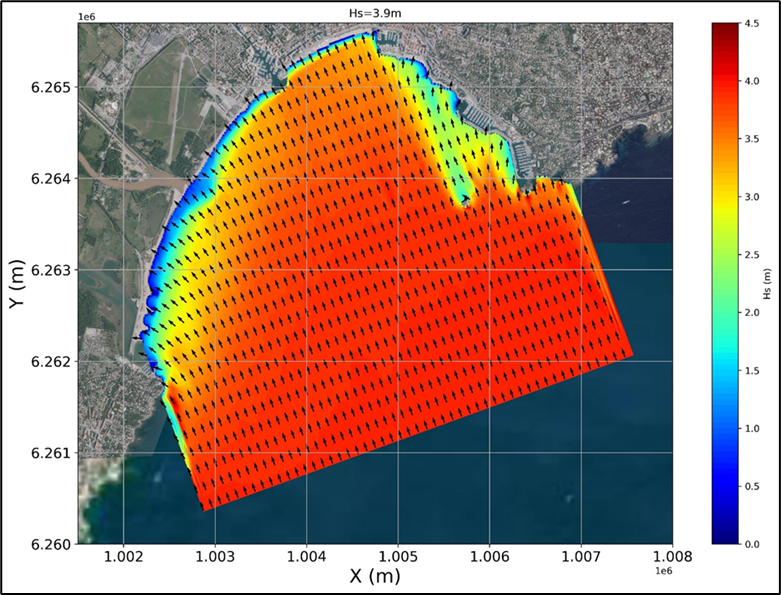
For the generation and propagation of sea states in the framework of global and regional scale studies, or to simulate incident wave conditions for local models (phase-resolving models for coastal flooding / harbor agitation, morphodynamic models), WMC uses a suite of spectral wave models:
WWM-II (coupling with SCHISM)
SWAN (coupling with LX-SHORE)
TOMAWAC (coupling with Telemac)

Hydrodynamic and morphodynamic models
WMC has expertise in a range of hydrodynamic and morphodynamic modeling systems:
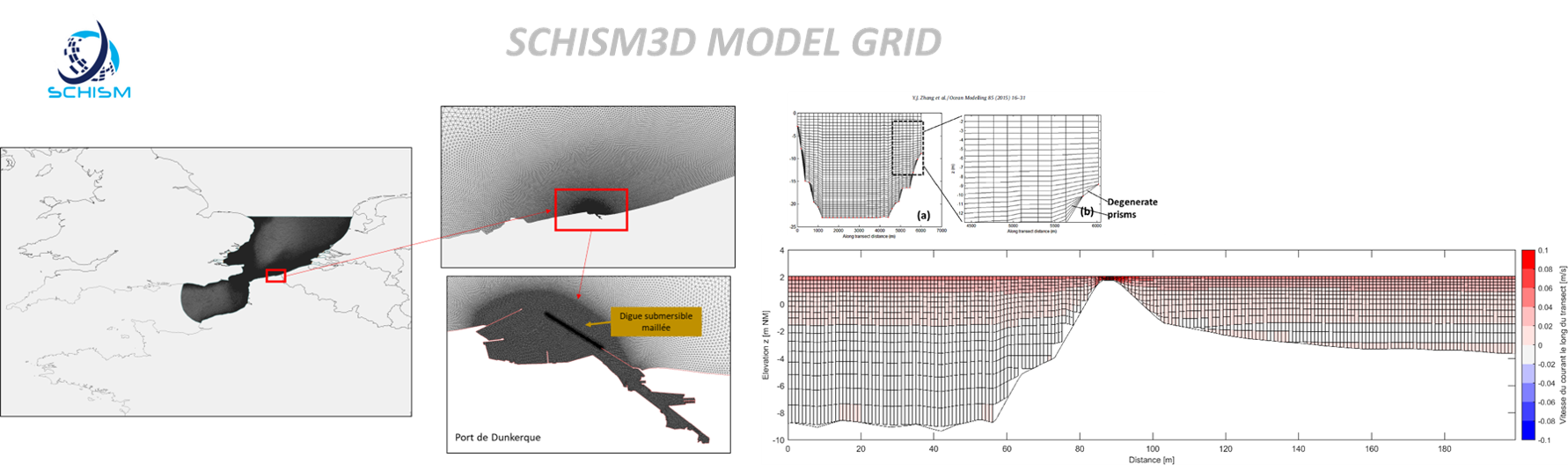
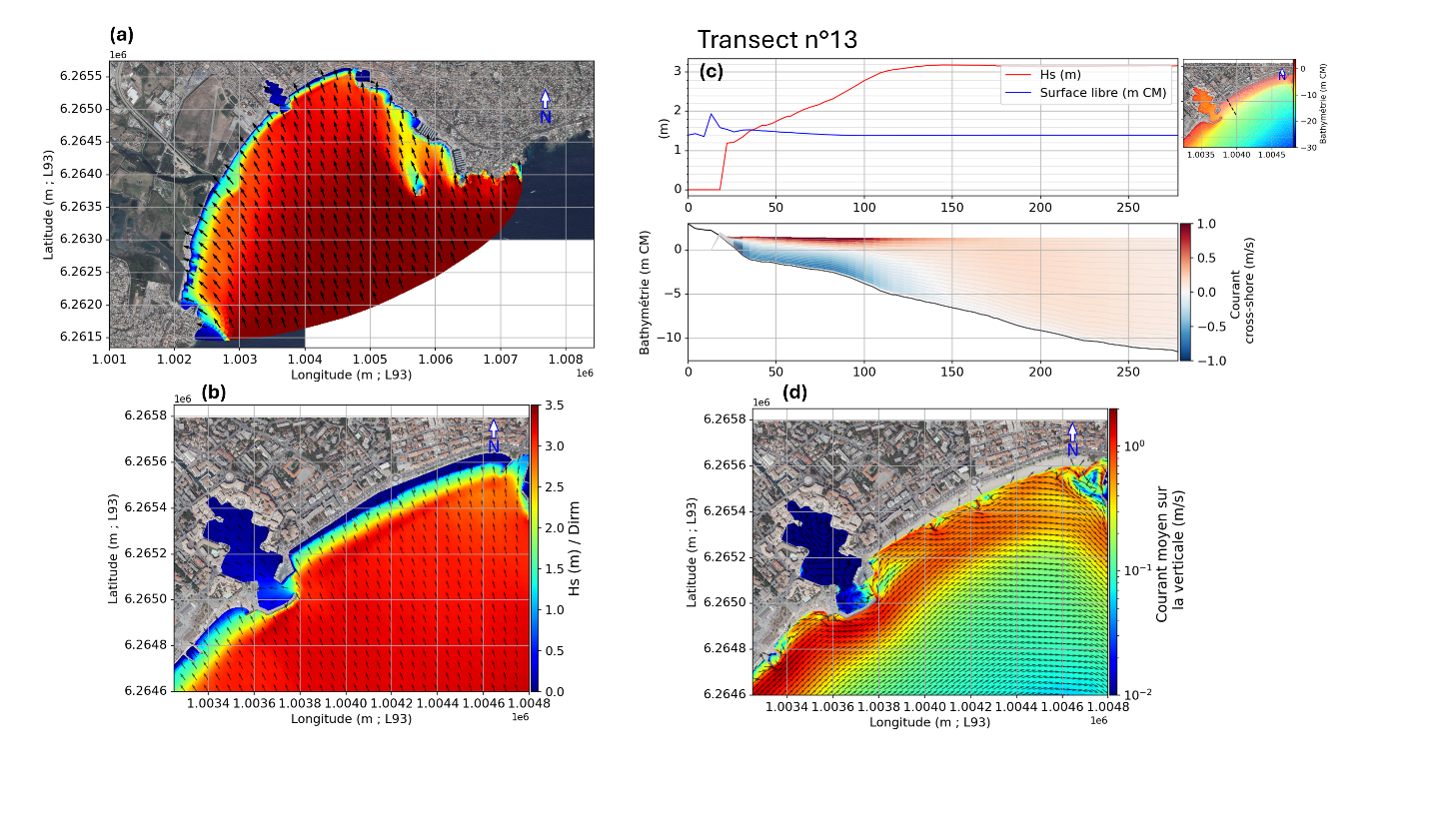
SCHISM, including 3D coupling with the wave model WWM-II, which simulates undertow currents (i.e. near-bed return currents)
TELEMAC, with possible 2D coupling with TOMAWAC.
XBeach (Surfbeat mode)
Our hydrodynamic modeling services include:
- Current modeling (tides, wind-driven currents, seiches)
- Sedimentary process simulation
- Water renewal studies
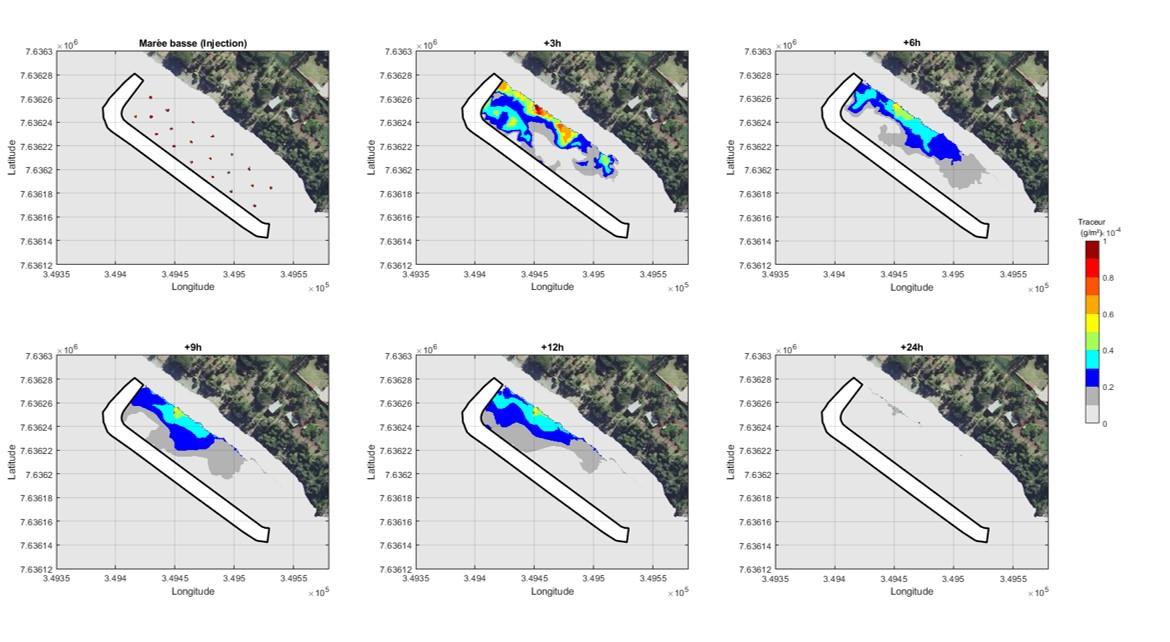
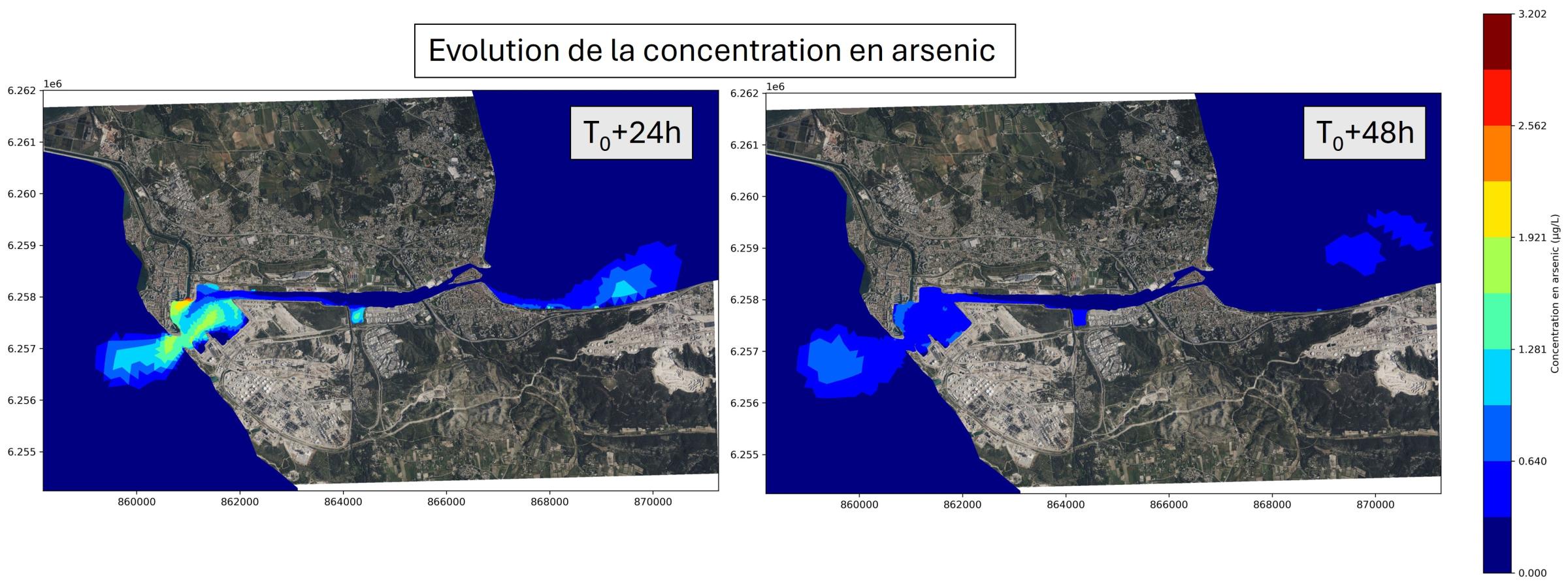
- Dispersion studies
Shoreline evolution model
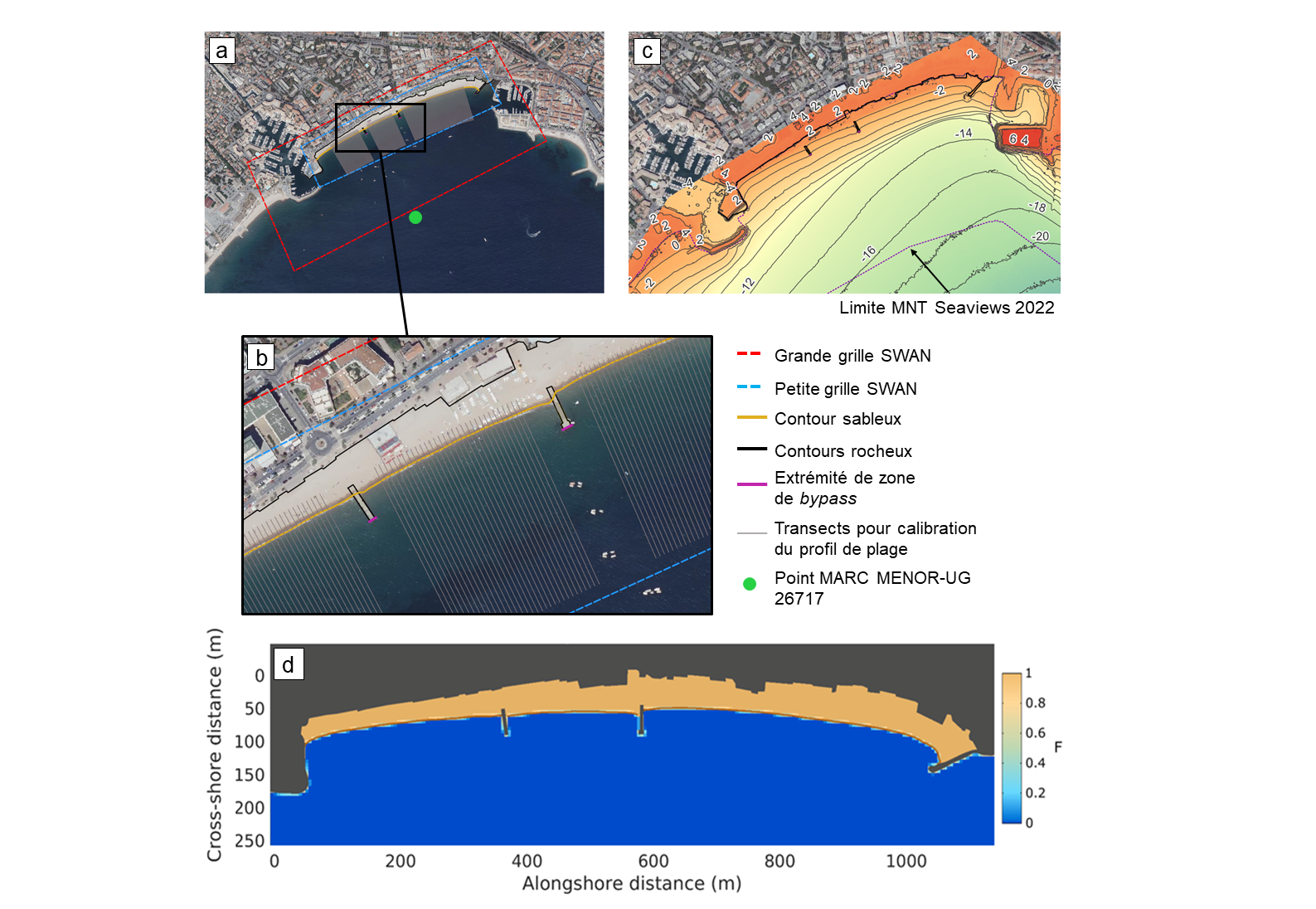
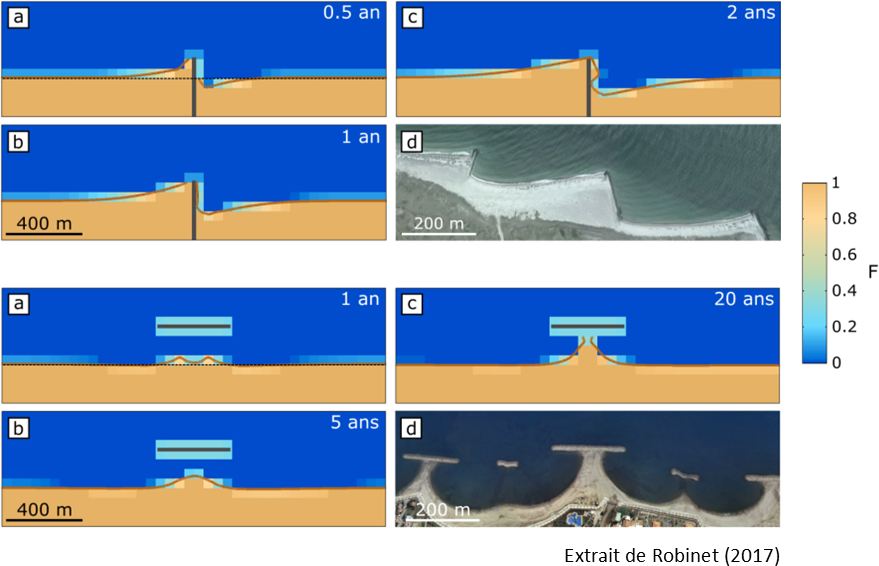
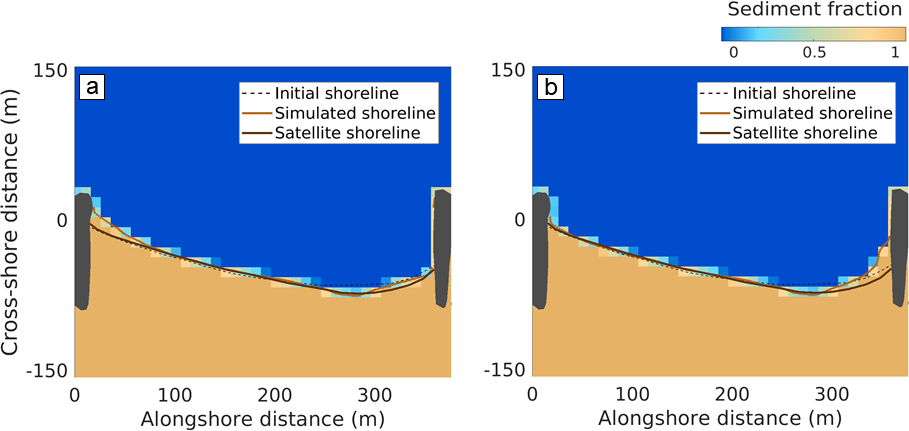
Through the supervision of Elsa Durand's PhD thesis, WMC directly contributed to the development of the LX-Shore model (Robinet et al., 2018) in collaboration with the EPOC laboratory (University of Bordeaux) and BRGM (French Geological Survey). LX-Shore is a reduced-complexity model designed to simulate the evolution of wave-dominated sandy coasts over large spatial and temporel scales. It accounts for the effects of longshore and cross-shore sediment transport, sea-level rise, and the influence of natural hard points or anthropogenic coastal structures. It can also be coupled with the SWAN spectral wave model to represent feedbacks between coastal morphology and wave conditions.
Parallel computing resources
WMC uses secure, state-of-the-art computing clusters for parallel simulations involving up to more than 100 processors. The main computing cluster is that of Ifremer (Datarmor). WMC has also set up user accounts on the clusters of the Universities of Bordeaux (Curta) and Pau (Pyrene). This ensures that modeling services can be delivered on time, even if one of the clusters fails.
Expert Approach
WMC's use of models is considered expert, as it includes the ability to intervene directly in the software code to improve the equation and parameterization of hydrodynamic, hydro-sedimentary, and morphodynamic physical processes. This expertise, combined with the use of state-of-the-art modeling systems, enables accurate simulation of processes and optimal interpretation of results.
Close ties with scientific research
WMC contributes to the development of modeling systems (SCHISM in collaboration with the University of La Rochelle and the Virginia Institute of Marine Science, LX-Shore with BRGM and the EPOC laboratory at the University of Bordeaux, HYCOM for SHOM).